
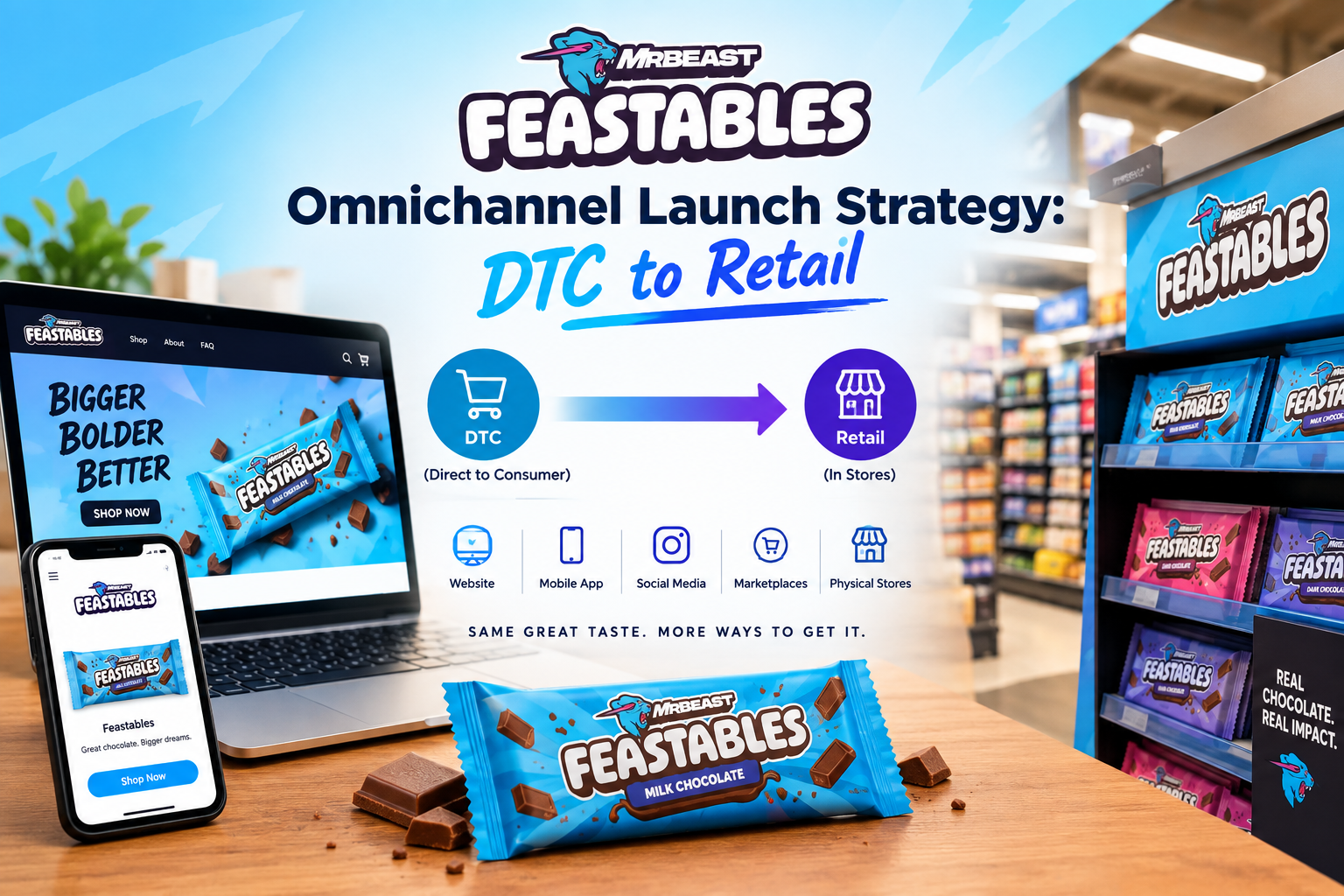
Scaling a Direct-to-Consumer (DTC) brand beyond digital storefronts is no longer just a growth option in 2026. It is an operational survival requirement. High customer acquisition costs on social media have forced digital-native brands to rethink their distribution playbooks entirely.
By analyzing top creator-led brands, founders can extract proven blueprints for mass-market expansion. Implementing the Feastables Omnichannel Launch Strategy allows modern e-commerce businesses to transition smoothly from digital storefronts like Shopify directly into big-box retail behemoths like Walmart, Target, and Tesco.
In this comprehensive guide, we unpack the exact step-by-step roadmap for scaling your consumer packaged goods (CPG) venture into physical retail while maintaining strong profit margins and brand equity.
Phase 1: Validating Digital Demand Before Retail Expansion
Before pitching big-box category buyers, your product must prove immense demand velocity online. Retail buyers do not take risks on unproven ideas; they rent expensive shelf space to brands that guarantee rapid inventory turnover.
Your primary goal during the digital-first phase is accumulating robust customer data. You must demonstrate that your brand commands an organic, repeatable, and enthusiastic fan base.
Leveraging First-Party Data for Retail Pitch Decks
When presenting to retail merchants, raw revenue figures are rarely enough. Retail buyers want to see geo-targeted demand density that matches their existing store footprints.
- Zip Code Analytics: Isolate where your highest density of online orders originates.
- Repeat Purchase Rates: Show that customers return to buy your product at least 30% of the time within 60 days.
- Demographic Resonant Hooks: Understand how your brand appeals to hyper-engaged audiences like Generation Z: Who They Are and Why They’re Changing Everything.
By mapping your e-commerce zip codes against a retailer’s store location map, you eliminate buyer guesswork. You effectively prove that foot traffic already exists waiting for your product to hit local shelves.
Optimizing Unit Economics for Wholesale Margins
DTC margins can easily hide unit economic inefficiencies due to high digital pricing flexibility. However, wholesale distribution requires a deep margin cushion to sustain retailer trade spend and distributor cuts.
Retailers typically demand a 40% to 50% margin, while regional distributors take an additional 15% to 25%. If your gross manufacturing margin is below 60%, wholesale expansion will quickly erode profitability.
“If your cost of goods sold (COGS) isn’t optimized for wholesale layers, scaling into retail will only accelerate cash burn rather than profitability.”
To prepare your product architecture for these channel dynamics, review our tactical guide on how to Build a 65%+ Margin CPG Product in 2026: Feastables Model.
Phase 2: Building the Retail Bridge from Digital to Physical Shelves
Transitioning from a Shopify ecosystem to physical retail requires shifting your marketing strategy from digital performance ads to real-world store velocity tools.
Physical shelves require immediate visual disruption. Consumers spend less than three seconds deciding which CPG item to pull off the rack.
Mastering In-Store Merchandising and POP Displays
Standard shelf placement often leads to product burial in middle aisles. Successful launches rely heavily on Point-of-Purchase (POP) floor displays, shipper displays, and endcap activations.
Custom pallet displays in high-traffic aisles convert casual shoppers into impulse buyers. MrBeast’s CPG brand used bold, bright floor displays to create instantly recognizable brand destinations inside Walmart stores nationwide.
To capture attention fast, brands must apply high-retention principles to physical retail packaging and display units, similar to techniques used in Automating MrBeast’s 3-Second Rule.
Leveraging Retail Media Networks (RMNs)
Modern omnichannel launches require aggressive spending on Retail Media Networks like Walmart Connect and Target Roundel. These platforms allow brands to run sponsored search ads directly inside retailer apps.
- Digital-to-Physical Attribution: Target shoppers searching for competing products on retailer mobile apps.
- In-Store Geo-Fencing: Push mobile notifications and digital coupons when customers walk into partner stores.
- Category Dominance: Secure top-of-search banner ads during launch week to maximize store-level pull.
Combining RMN ads with localized social media campaigns creates a powerful omni-channel feedback loop. This strategy drives measurable foot traffic straight to specific aisle numbers.
Core Pillars of the 2026 Feastables Omnichannel Launch Strategy
Executing a flawless omnichannel rollout depends on synchronized execution across product development, supply chain readiness, and viral marketing.
The effective Feastables Omnichannel Launch Strategy treats physical retail stores not as separate sales channels, but as physical extensions of an overarching content ecosystem.
1. High-Velocity Product Formulations
Snack and beverage products must offer mass appeal combined with a simple, high-impact value proposition. Complex, niche ingredients slow down purchasing decisions in mass retail environments.
Focus on clean label claims, superior taste tests, and striking packaging colors that stand out under harsh supermarket fluorescent lights. Simple messaging always outperforms over-explained packaging features.
2. Nationwide Supply Chain Redundancy
Running out of stock on Shopify means losing temporary sales. Running out of stock at Walmart results in severe compliance fines, loss of shelf space, and demotion in merchant rankings.
Brands scaling into big-box retailers must secure multi-node fulfillment partners and regional co-packers. Utilizing enterprise tools like Shopify Enterprise Omnichannel Solutions helps synchronize inventory balances between direct fulfillment centers and wholesale distribution centers seamlessly.
3. Integrated Digital-to-Retail Gamification
Why do consumers hunt down specific products across multiple retail locations? Because the purchase process is turned into an interactive event.
- Golden Ticket Campaign Mechanics: Place unique QR codes or winning game tickets inside product packaging to incentivize immediate unboxing.
- Community Shelf Scavenger Hunts: Challenge digital followers to locate and clean out local store displays for social media shoutouts.
- Exclusive Retail Flavor Drops: Partner with specific retailers (e.g., Walmart exclusives) to build urgency and channel exclusivity.
Overcoming Operational Bottlenecks in Big-Box Scaling
Moving into mass retail introduces complex operations that can overwhelm unprepared e-commerce teams. You must adapt your internal systems to meet strict retailer compliance rules.
Navigating EDI, Chargebacks, and Vendor Portals
Big-box retailers communicate using Electronic Data Interchange (EDI) protocols for purchase orders, advance shipping notices, and invoicing.
Failing to comply with precise packaging, labeling, or delivery windows results in heavy monetary chargebacks. Ensure your logistics infrastructure integrates directly with systems like Walmart Retailer Services to automate order processing and track compliance scores.
Managing Cash Flow and Working Capital Gaps
Retail purchase orders require upfront manufacturing capital months before payment is collected. Payment terms like Net 60 or Net 90 can cripple cash flow if working capital is not managed carefully.
- Purchase Order (PO) Financing: Fund production costs against verified purchase orders from reputable retailers.
- Invoice Factoring: Advance cash against unpaid retail invoices to maintain operational liquidity.
- Asset-Based Lending Lines: Secure revolving credit lines backed by warehouse inventory assets.
Proactive financial planning prevents stockout crises during rapid retail expansion phases. High-growth CPG leaders maintain dedicated debt facilities specifically for retail inventory cycles, as noted in market coverage from Forbes Retail Strategy Insights.
Execution Framework: The Step-by-Step Omnichannel Launch Checklist
Follow this strategic blueprint to transition your direct-to-consumer operations into a multi-channel retail powerhouse:
| Phase | Key Milestone | Core Focus Area |
|---|---|---|
| Month 1 – 3 | COGS & Unit Economic Audit | Achieve 65%+ gross margin and secure multi-node co-packing. |
| Month 4 – 6 | Retail Pitch & Buyer Sign-off | Present localized zip-code demand data and customized shipper displays. |
| Month 7 – 9 | EDI Integration & Logistics Setup | Establish automated EDI pipelines and regional 3PL routing networks. |
| Month 10+ | Nationwide Retail Rollout | Trigger local digital ads, creator activations, and RMN campaigns. |
Conclusion: Mastering the Modern CPG Expansion Playbook
Scaling a digital brand into thousands of big-box retail locations requires more than brand hype. It demands rigorous margin discipline, optimized logistics, and viral marketing integration.
By mastering the Feastables Omnichannel Launch Strategy, CPG founders can turn early DTC momentum into sustained retail dominance. Protect your unit economics, build operational redundancies, and treat every physical retail display as a high-converting physical landing page.
When executed correctly, your omnichannel strategy will build a long-lasting, highly profitable brand footprint across both digital screens and physical supermarket aisles worldwide.
Frequently Asked Questions (FAQs)
What is the Feastables Omnichannel Launch Strategy?
The Feastables Omnichannel Launch Strategy is an expansion blueprint that leverages high DTC digital brand awareness, localized customer order data, and creator marketing to launch CPG products successfully into major physical retail chains like Walmart and Target.
What gross margin does a DTC CPG brand need before entering wholesale retail?
A DTC CPG brand should ideally achieve a 60% to 65%+ gross manufacturing margin prior to wholesale expansion. This cushion absorbs retailer margins (40-50%), distributor cuts (15-25%), and trade spend fees.
How do digital brands convince big-box buyers to award shelf space?
Brands convince retail buyers by presenting zip-code analytics proving existing digital sales density near prospective store locations, demonstrating high repeat purchase rates, and offering dedicated co-marketing or exclusive retail launches.
What are the common operational pitfalls when transitioning from Shopify to big-box retail?
Common pitfalls include failing to comply with EDI data standards, incurring severe chargebacks due to shipping window errors, mismanaging cash flow during Net 60/90 payment cycles, and stockouts caused by poor inventory forecasting.
2 thoughts on “Feastables Omnichannel Launch Strategy: DTC to Retail”